
- 15 Sep, 2026
- 0 Comments
- 24 Mins Read

How to Prepare for the 2026 NSC Mathematics Examination
Exam preparation
How to Prepare for the 2026 NSC Mathematics Examination
Mathematics Paper 1 is written on Friday 23 October and Paper 2 on Monday 26 October, three hours and 150 marks each. The Department of Basic Education publishes exactly how those marks are shared out by topic. Preparing well starts with reading that.
 For matriculants and parents
How should you prepare for the 2026 NSC Mathematics exam?
Work from the mark allocation, not from the textbook’s chapter order. Paper 1 gives 70 of its 150 marks to Functions and Graphs and Differential Calculus; Paper 2 gives 90 of its 150 to Trigonometry and Euclidean Geometry. Write recent past papers by hand, timed, and mark them against the memorandum to find which of those topics is losing marks. Then fix that topic with questions, not reading, and rehearse the full paper again before 23 October.
Everything below comes from two Department of Basic Education documents: the Mathematics Examination Guidelines for Grade 12 and the national October/November 2026 NSC timetable. This is for CAPS learners writing the National Senior Certificate; IEB Mathematics is set separately. If Mathematics is the one subject that worries you, you can book a verified Mathematics tutor on the MyAPEX app and use the rest of this guide as the brief.
When are the Mathematics papers, and how long are they?
Paper 1 is on Friday 23 October 2026 at 09:00 and Paper 2 on Monday 26 October 2026 at 09:00, on the national Department of Basic Education timetable. Each paper is three hours and 150 marks. Mathematical Literacy and Technical Mathematics are written on the same two dates. The weekend between the papers is the only revision window for Paper 2, so plan it now, and confirm both dates on your examination permit.
| Paper | Date | Time | Duration | Marks |
|---|---|---|---|---|
| Mathematics Paper 1 | Friday 23 October 2026 | 09:00 | 3 hours | 150 |
| Mathematics Paper 2 | Monday 26 October 2026 | 09:00 | 3 hours | 150 |
Three hours is a physical task. If the only three-hour Mathematics paper you have written by hand this year is the preliminary examination, the first thing to change is that. The full timetable, including the days with no papers, is in our matric exam timetable 2026 guide.
What is in Paper 1 and Paper 2, mark by mark?
Paper 1: Algebra, Equations and Inequalities 25 marks; Number Patterns 25; Functions and Graphs 35; Finance, Growth and Decay 15; Differential Calculus 35; Counting Principle and Probability 15. Paper 2: Statistics and Regression 20; Analytical Geometry 40; Trigonometry 50; Euclidean Geometry 40. Those are the Department of Basic Education’s own weightings, and they tell you where a week of work earns the most.
| Paper 1 topic | Marks | Paper 2 topic | Marks |
|---|---|---|---|
| Algebra, Equations and Inequalities | 25 | Statistics and Regression | 20 |
| Number Patterns | 25 | Analytical Geometry | 40 |
| Functions and Graphs | 35 | Trigonometry | 50 |
| Finance, Growth and Decay | 15 | Euclidean Geometry | 40 |
| Differential Calculus | 35 | ||
| Counting Principle and Probability | 15 | ||
| Total | 150 | Total | 150 |
Source: DBE, Mathematics Examination Guidelines, Grade 12, section 2.2. Two things stand out. Functions and Calculus are almost half of Paper 1, and they are linked, because calculus questions are asked about functions. Trigonometry alone is a third of Paper 2, and with Euclidean Geometry it is 90 of the 150 marks. A learner who is weak in trigonometry cannot compensate with statistics; there are only 20 marks there.
An information sheet is provided in the examination. The guidelines say so, and it carries the formulae. What it does not do is tell you which formula a question needs, or how to change the subject of it. Practise with the sheet beside you, so that you are used to what is on it and what is not.
How are the marks allocated by difficulty?
The guidelines split every 150-mark paper by cognitive level: Knowledge 20 percent, about 30 marks; Routine Procedures 35 percent, about 52; Complex Procedures 30 percent, about 45; and Problem Solving the remaining 15 percent, about 22. So 55 percent of each paper, roughly 82 marks, is recall and well-known procedures “generally similar to those encountered in class”. Securing those marks is the difference between a pass and a fail for most learners.
| Cognitive level | Share | Marks of 150 | What it looks like |
|---|---|---|---|
| Knowledge | 20% | about 30 | Recall, using the information sheet, facts, rounding |
| Routine Procedures | 35% | about 52 | Prescribed proofs, well-known procedures, simple applications |
| Complex Procedures | 30% | about 45 | Several steps, no obvious route, connecting topics |
| Problem Solving | 15% | about 22 | Unfamiliar, non-routine problems |
Source: DBE, Mathematics Examination Guidelines, Grade 12, section 2.3. The practical reading: a learner aiming to pass should make the first 82 marks bulletproof before spending an evening on the hardest question in the paper. A learner aiming for a distinction needs the complex-procedure marks, which mostly come from integrating topics, functions with calculus, trigonometry with geometry.
What should the remaining weeks look like?
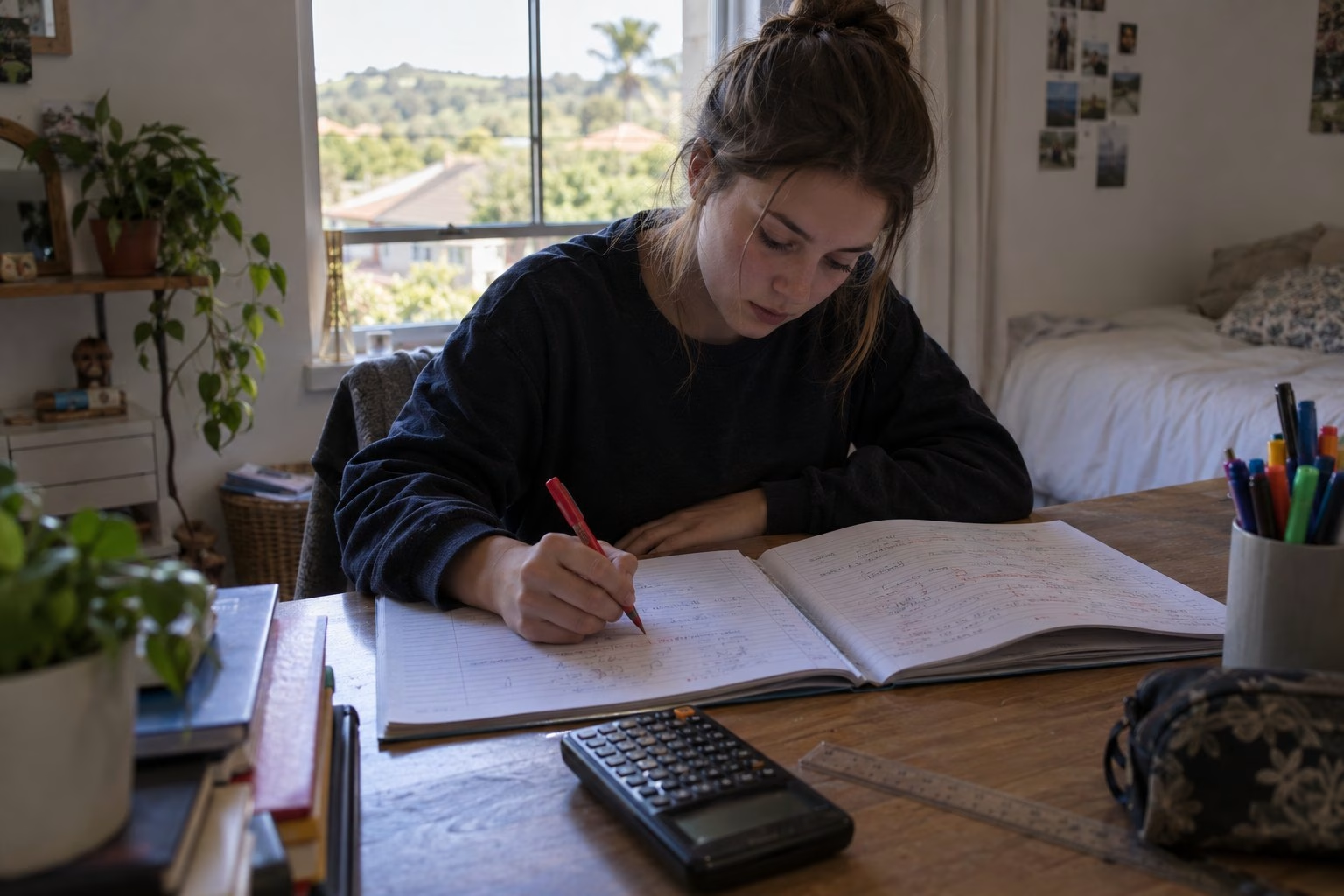
Week one: write a recent Paper 1 and Paper 2, timed, three hours each, and mark both with the memorandum, noting the topic and the reason for every lost mark. Week two: fix the two or three highest-weighted topics that lost marks, ten questions per topic. Week three: full papers again, morning slot, compared with week one. Week four: formulae, prescribed proofs, and sleep. Every session is written by hand with a scientific calculator.
This is the Mathematics version of our four week study plan. The Department publishes previous question papers and memoranda free on its NSC past examination papers page; use the most recent November papers first, because they are closest to what you will write.
Marking is where the learning is
The memorandum allocates marks per step, not per final answer. Mark your own paper the same way and you learn two things the answer alone hides: which steps you skip, and where a correct method still lost marks because the working was not shown. Note the reason for each lost mark in one of four words: unknown, time, misread, slip. Each needs a different fix.
The Paper 2 weekend
Saturday 24 and Sunday 25 October are your last trigonometry and geometry days. Decide now what happens in them: one full Paper 2 on the Saturday morning at 09:00, marked in the afternoon, and the Sunday on whichever of the two heavy topics lost more.
Where do learners typically lose Mathematics marks?
In our tutors’ experience, less often on the hard question than on the routine ones: working not shown so method marks are lost, a sign dropped when a term moves across, the wrong formula chosen from the information sheet, a prescribed proof half-remembered, and time spent on a five-mark problem while a twelve-mark routine question at the end goes unanswered. All of those are fixable in four weeks, because they are habits rather than gaps in knowledge.
- Show every step. The memorandum pays for method. A right answer with no working can score less than a wrong answer with the right method.
- Learn the prescribed proofs. Euclidean Geometry theorems that may be examined are listed in the guidelines, and a proof is routine marks if you know it and zero if you do not.
- Read the question twice. “Hence” means use the previous part. “Without using a calculator” means show the exact working.
- Answer in mark order, not question order. Secure the knowledge and routine marks across the whole paper before returning to the hard parts.
- Leave nothing blank. A partial method earns partial marks. A blank earns none.
Where does Apex Academic Centre fit in?
Apex Academic Centre is a tutoring provider, not an examination centre; the Department of Basic Education sets the papers and your examination centre issues the permit. What Apex does is match a learner with a verified Mathematics tutor, qualified in the subject and listed for CAPS, who works through the marked past paper and the topic list with them, online or in person, or in live online matric group classes that cover Mathematics as one of eight NSC subjects.
Every Apex tutor’s identity and qualifications are checked before they teach, and the qualifications are checked against the subjects and levels they ask to teach, so a tutor listed for Grade 12 Mathematics has shown the certificate for it. Read how to choose a Mathematics and Physical Sciences tutor before the exams, then book on MyAPEX. Lessons on Apex’s Custom LMS are recorded, so a learner can replay the explanation of a topic the night before the paper.
Group classes: live online, past papers and answering technique, from R700 per subject per month for CAPS learners, correct on 15 September 2026; confirm on the matric classes page. No tutoring service can promise a mark, and Apex does not. What changes is how quickly the routine marks become secure.
Frequently asked questions
01
When is the 2026 NSC Mathematics exam?
Mathematics Paper 1 is written on Friday 23 October 2026 at 09:00 and Paper 2 on Monday 26 October 2026 at 09:00, on the national Department of Basic Education timetable. Each paper is three hours and 150 marks. Confirm your own dates, times and venue on the examination permit issued by your examination centre.
02
What topics are in Mathematics Paper 1?
Algebra, Equations and Inequalities (25 marks), Number Patterns (25), Functions and Graphs (35), Finance, Growth and Decay (15), Differential Calculus (35) and Counting Principle and Probability (15), totalling 150, according to the Department of Basic Education’s Mathematics Examination Guidelines for Grade 12.
03
What topics are in Mathematics Paper 2?
Statistics and Regression (20 marks), Analytical Geometry (40), Trigonometry (50) and Euclidean Geometry (40), totalling 150, according to the Department of Basic Education’s Mathematics Examination Guidelines. Trigonometry and Euclidean Geometry together are 90 of the 150 marks.
04
Is an information sheet provided in the NSC Mathematics exam?
Yes. The Department of Basic Education’s Mathematics Examination Guidelines state that an information sheet is included with the paper. It carries the formulae; it does not tell you which one a question needs or how to rearrange it, so practise with the sheet beside you.
05
How do I pass Mathematics in matric?
Secure the Knowledge and Routine Procedures marks first. The guidelines allocate about 55 percent of each paper, roughly 82 of 150 marks, to recall and well-known procedures similar to classwork. Learn the prescribed proofs, show every step, and write timed past papers marked against the memorandum. No tutor can promise a mark, but that is where a pass is built.
23 and 26 October
Find the topic that is losing marks. Fix that one first.
A verified Apex Mathematics tutor, listed for CAPS and Grade 12, can work the marked past paper with your child this week, online or in person.