
- 21 Sep, 2026
- 0 Comments
- 25 Mins Read

Sleep Before Exams: What the Evidence Says for Teenagers
Parenting and support
Sleep Before Exams: What the Evidence Says for Teenagers
Every matriculant has been told to get a good night’s sleep, usually by someone who cannot say why it matters. It matters because of what the brain does with the day’s work overnight, and because almost every paper is written at nine in the morning.
 For parents
How much sleep before exams does a teenager need?
Eight to ten hours in every twenty-four, on a regular basis, for ages thirteen to eighteen. That is the consensus recommendation of the American Academy of Sleep Medicine, reached by a panel of thirteen paediatric sleep specialists after reviewing 864 published studies. The panel links sleeping the recommended amount to better attention, learning, memory and emotional regulation, all of which a examination happens to test.
The recommendation is published as Recommended Amount of Sleep for Pediatric Populations in the Journal of Clinical Sleep Medicine. Eight hours is the floor rather than the target, and “on a regular basis” is doing real work in that sentence: a run of short nights followed by one long catch-up is not the same thing. If a subject rather than the sleep is the real problem, you can book a verified tutor on the MyAPEX app and stop trading nights for it.
This article is about ordinary sleep and ordinary exam weeks. It is not medical advice, and it deliberately says nothing about supplements or medication. Where sleep has genuinely broken down, the last section says what to do instead.
Why does an all-nighter cost more than it gains?
Because the hours you take are the hours the brain uses to keep what you studied. Sleep is when new learning is consolidated from a fragile state into a durable one, which is the subject of Walker and Stickgold’s review of sleep-dependent learning and memory consolidation in Neuron. Studying until three and writing at nine trades the consolidation of everything you revised that week for a few more hours of fragile new material.
There is a second cost that is easier to see. Attention, working memory and the speed at which you retrieve something under pressure are all worse after a short night, and a three-hour paper is exactly the task that exposes all three. A learner can know the work and still lose marks to misreading the question, which is one of the four reasons marks go missing in our guide to how past papers improve your exam performance.
The honest version. Nobody can promise that sleeping eight hours raises a mark. What the evidence supports is narrower and still worth acting on: sleep supports memory and attention, and those are what the paper measures. Cramming through the night is a trade, and it is a bad one this close to the papers.
What should the last week look like?
Boring and identical. Same wake-up time every day including weekends, same rough bedtime, and study blocks in daylight rather than pushed later and later. The aim is that the body is already used to being alert at nine in the morning before it has to be alert at nine in the morning for marks. A learner who has been studying until one and waking at ten needs several days to move, not one.
- Fix the wake-up time first. It is easier to shift than bedtime, and bedtime follows it within a few days.
- Move the heavy work earlier. The hardest subject in the morning block, not at eleven at night.
- Stop revising at a set time. An open-ended evening drifts. A finish time at nine or ten creates one.
- Keep weekends the same. A Saturday lie-in of three hours undoes most of the week’s adjustment.
- Wind down for half an hour. Something that is not the syllabus and not a screen, between the last block and lights out.
When should screens and caffeine stop?
Screens out of the bedroom at lights out, and caffeine finished by mid-afternoon. Neither needs a rule with a precise hour attached to be useful: the point of the phone rule is that a phone within reach turns ten wakeful minutes into ninety, and the point of the caffeine rule is that a late coffee or energy drink is still working at bedtime whether or not the drinker feels it.
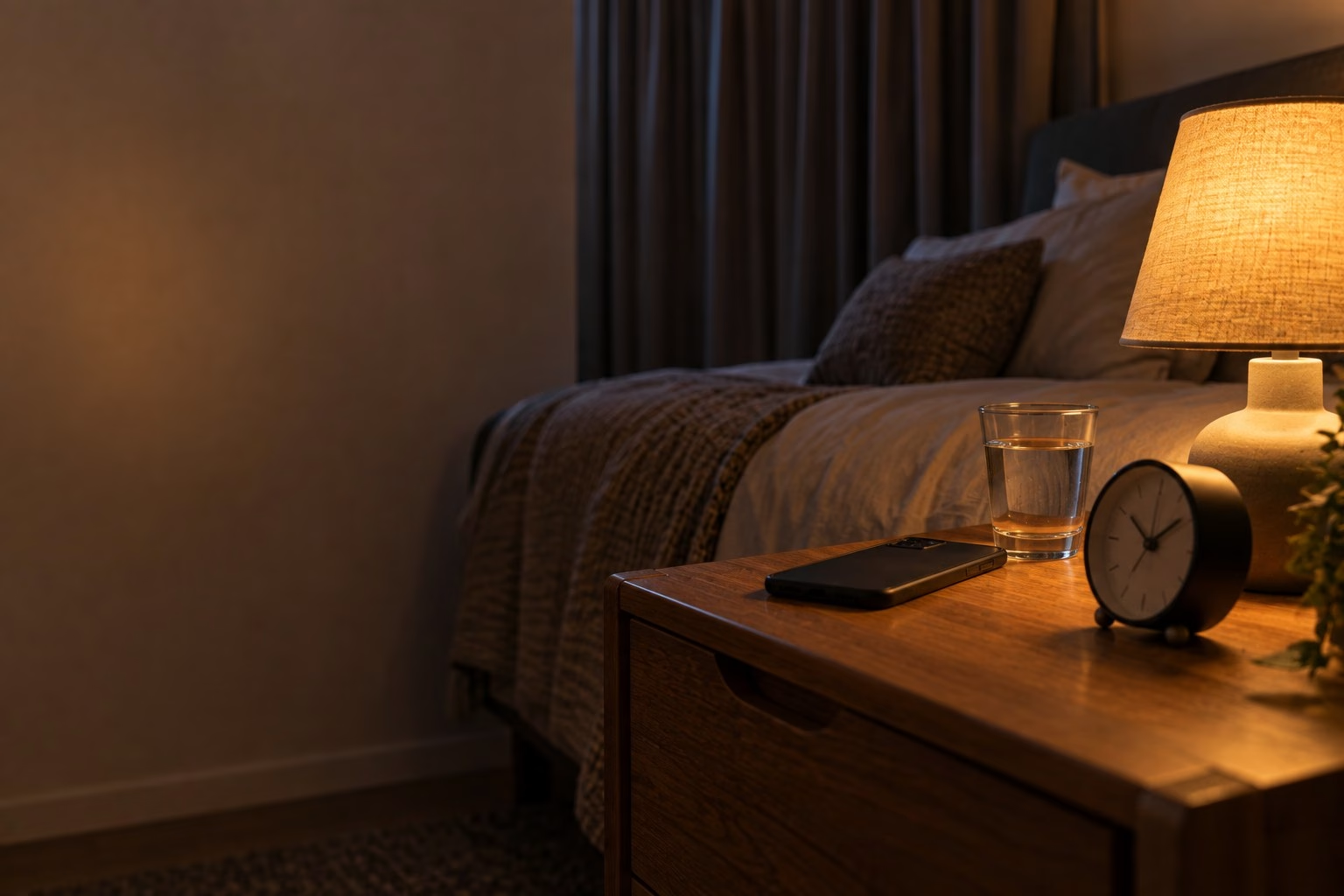
The practical version most families can actually hold: the phone charges in the kitchen overnight, not on the bedside table. It removes the decision rather than relying on willpower at midnight, which is when willpower is worst. The same goes for a laptop that has been open since supper.
On caffeine, the South African food-based dietary guidelines published by the Department of Health say to use sugar and drinks high in sugar sparingly, which is the relevant advice for the energy drinks that appear in every exam season. What to put in a bag instead is covered in eating for exam season.
What about the night before a 09:00 paper?
No new content, an early finish and the bag already packed. On the Department of Basic Education’s 2026 timetable almost every paper is written at 09:00, with a few at 14:00, so the night before is part of the preparation rather than time taken from it. Reading summaries and formulae for an hour is fine. Meeting a topic for the first time at eleven at night is a gamble that costs the morning.
For an afternoon paper the calculation changes slightly: a normal night, a normal breakfast, a light lunch and a short review in the morning rather than a long one. Cambridge, Pearson Edexcel and IB candidates sit morning or afternoon sessions whose exact start times are set by the school or the zone, so check the school’s own notice rather than assuming nine o’clock.
Pack the night before. Pens, a scientific calculator, a ruler, the identity document and the examination permit, done at eight in the evening rather than at half past seven in the morning. It is one less thing standing between waking and leaving, and it is the difference between a calm morning and a hunt. The full list is in our week before the exams checklist.
What if your child genuinely cannot sleep?
Treat it as a health question rather than a discipline question. If a learner is lying awake for hours most nights, waking repeatedly, or exhausted through the day for more than a week or two, see a doctor or the school counsellor rather than working through a list of remedies at home. Persistent sleeplessness during exams is also sometimes anxiety showing up at night, which needs the same professional route.
That is the one line in this article that matters more than the rest. Do not try to solve broken sleep with anything bought off a shelf, and do not assume it will resolve itself once the papers are over. Free help exists: the South African Depression and Anxiety Group runs telephone helplines, and the school counsellor usually knows both the learner and the term. Where nerves rather than sleep are the root of it, our guide to matric exam anxiety sets out what helps and where the line is.
How do you make room for sleep when there is too much to do?
By making the study hours count rather than making them longer, which is the only real answer. A learner who is rereading notes needs far more hours than one answering questions from memory and marking them, and the difference is usually the two or three hours a night that were being taken from sleep. The method is what buys the time back, not discipline.
That method is set out in active recall revision, and the way to spend a week is in the four week study plan. The other thing that buys hours back is getting help with the subject that is eating them. One subject that a learner cannot start is worth several late nights of staring at it.
Where does Apex Academic Centre fit in?
Apex has nothing useful to say about sleep, and says so. What it can do is remove the reason a learner is awake at one in the morning, which is usually one subject they cannot get through on their own. A verified tutor, matched to the subject, curriculum and grade, works the gap directly, online or in person through the MyAPEX app, across CAPS, IEB, Cambridge, Pearson Edexcel and IB.
Lessons delivered on Apex’s Custom LMS are recorded, which also helps here: a topic explained at four in the afternoon can be replayed at seven in the evening instead of being puzzled over at midnight. Book a tutor on MyAPEX, or see the full list of subjects offered. Apex is a tutoring provider, not an examination centre and not a medical service, and no tutoring service can promise a mark.
Frequently asked questions
How many hours should a teenager sleep before exams?
Eight to ten hours in every twenty-four for ages thirteen to eighteen, on a regular basis. That is the consensus recommendation of the American Academy of Sleep Medicine, reached by a panel of thirteen paediatric sleep specialists after reviewing 864 published studies, and it links adequate sleep to better attention, learning and memory.
Is it better to study all night or sleep before an exam?
Sleep. The hours taken from a night are the hours the brain uses to consolidate what was studied, and attention and working memory are both worse after a short night. A three-hour paper written at 09:00 is exactly the task that exposes both, so an all-nighter trades a week of revision for a few fragile hours.
What time should my child stop using their phone before an exam?
At lights out, and ideally with the phone charging in another room rather than on the bedside table. The rule works because it removes the decision rather than relying on willpower at midnight. Caffeine is worth finishing by mid-afternoon for the same practical reason.
What should a matric learner do the night before a paper?
No new content. An hour with summaries, formulae and definitions at most, an early finish, and the bag packed with pens, calculator, ruler, identity document and examination permit. Almost every paper on the 2026 timetable is written at 09:00, so the night before is part of the preparation.
What if my child cannot sleep during exams?
If they are lying awake for hours most nights, waking repeatedly, or exhausted through the day for more than a week or two, see a doctor or the school counsellor. Do not treat broken sleep with anything bought off a shelf. Persistent sleeplessness in exam season is sometimes anxiety appearing at night, which needs the same professional route.
Eight hours is the floor
Make the hours count instead of making them longer.
The subject a learner cannot get through alone is usually the one costing the sleep. A verified Apex tutor can take it off the evening.