
- 21 Sep, 2026
- 0 Comments
- 24 Mins Read

Exam Season Eating: Simple Food That Helps Concentration
Parenting and support
Exam Season Eating: Simple Food That Helps Concentration
There is a great deal of nonsense written about food and examinations. This is the boring version, built on the Department of Health’s own dietary guidelines, with the only exam-specific part being when to eat rather than what to buy.
 For parents
What does sensible exam season eating actually look like?
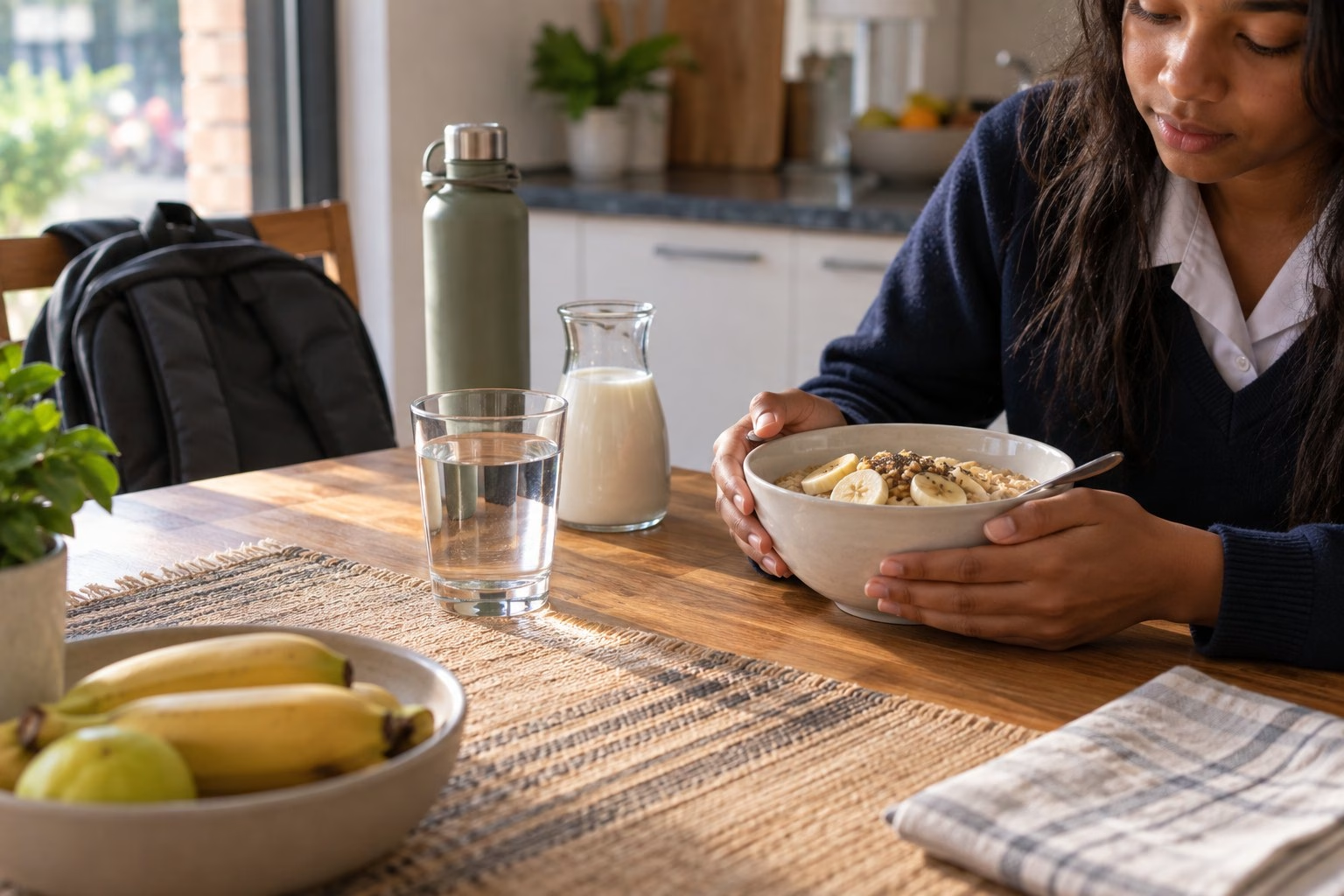
Ordinary balanced meals at ordinary times, with the timing planned around the paper rather than the food changed for it. Eat breakfast before a morning paper. Take something plain and water for an afternoon sitting. Drink water through the day. Nothing a family eats needs to change for examinations, and no food raises a mark. What food can do is stop hunger, thirst and a sugar crash from getting in the way.
Everything below that is a nutrition statement comes from the South African food-based dietary guidelines, issued by the National Department of Health’s Directorate of Nutrition. They were first published in 2003 and revised in 2012, and they target people aged five and older. They are general healthy-eating advice; they say nothing about examinations, and this article does not pretend otherwise. If the real problem is a subject rather than a breakfast, you can book a verified tutor on the MyAPEX app.
What do the South African guidelines actually say?
Eleven things, and none of them is exotic or expensive. Enjoy a variety of foods. Be active. Make starchy foods part of most meals. Eat plenty of vegetables and fruit every day. Eat dry beans, split peas, lentils and soya regularly. Have milk, maas or yoghurt every day. Fish, chicken, lean meat or eggs can be eaten daily. Drink lots of clean, safe water. Use fats sparingly. Use sugar sparingly. Use salt sparingly.
That is the whole official list, quoted as published. Two of them do most of the work in an examination month: “Drink lots of clean, safe water” and “Use sugar and foods and drinks high in sugar sparingly”. The second is the one that quietly rules out most of what gets bought in exam season.
What is not on the list. Any specific food that improves concentration, any supplement, and any brand. If a claim about a “brain food” is not in the guidelines above, it is not in this article either, and it should not be in the trolley on the strength of a blog post.
What should a learner eat before a 09:00 paper?
Something, which is the entire point, and ideally a starchy food with a protein alongside it. Oats, brown bread with peanut butter, or eggs, with milk or maas and a glass of water. Eaten about an hour before leaving, not in the car. The guidelines say to make starchy foods part of most meals and to have milk, maas or yoghurt every day, and breakfast before a three-hour paper is simply one of those meals.
Most papers on the Department of Basic Education’s 2026 timetable are written at 09:00, which means leaving home somewhere around seven for many families. That is early enough that skipping breakfast is the default unless someone plans against it. The plan is the night before: decide what it will be, and have it in the house.
Cambridge, Pearson Edexcel and IB candidates sit morning or afternoon sessions whose exact start time is set by the school or the zone, so work from the school’s own notice. The principle does not change.
What should you pack for a 14:00 sitting?
A proper lunch eaten early enough to have settled, plus water. Something plain: a sandwich, leftovers, a banana. Avoid making the afternoon paper the first time your child tries an unfamiliar meal, and avoid a very heavy lunch immediately beforehand. On the 2026 CAPS timetable the afternoon sittings are at 14:00, so a meal around half past twelve leaves a sensible gap.
- Water, in a clear bottle. Check what your examination centre allows; many require the label removed.
- Something plain and familiar. Exam day is the wrong day to experiment.
- Eat before, not during. Most centres do not allow food in the hall.
- Nothing that needs a fridge if the bag is sitting in a warm classroom all morning.
What else goes in the bag, and what is worth confirming with the examination centre rather than assuming, is in our week before the exams checklist.
Does drinking water actually matter?
Enough to be worth a bottle on the desk. “Drink lots of clean, safe water” is one of the eleven South African guidelines in its own right, and research on schoolchildren has linked even mild dehydration to poorer performance on memory and attention tasks, with one crossover trial published in PLOS One finding hydration status associated with cognitive performance. It is a cheap thing to get right during a three-hour paper.
Two practical notes. Tap water is what the guideline means, and it costs nothing. And a bottle on the study desk through the afternoon does more than a large glass just before leaving for the hall, which mostly results in a trip out of the examination room.
Why do energy drinks backfire in exam season?
Because they deliver a large amount of sugar and caffeine at once, and the dip afterwards tends to arrive in the middle of the paper rather than after it. The South African guidelines say to use sugar and drinks high in sugar sparingly, which is the relevant official advice. Caffeine late in the day also works against the sleep a learner needs before a 09:00 start.
The same applies to the study week, not just exam day. A learner running on energy drinks in the evening and struggling to sleep afterwards has created two problems, and the second one is the expensive one, as set out in sleep before exams.
If a learner wants a lift before a paper, a normal breakfast and water does it without a crash. Nothing here is a claim about health effects beyond what the guidelines say; it is a claim about timing, and timing is the part that affects the paper.
What does this look like on a real budget?
Cheaper than what it replaces, in most cases. Oats, brown bread, peanut butter, eggs, maas, bananas, dry beans and tap water cover most of the eleven guidelines and cost less per meal than the takeaways, cold drinks and energy drinks that tend to appear in a stressful month. The guidelines are written for South African households rather than for a wellness aisle, which is exactly why they are the right source here.
A week of exam-season eating that follows them does not require a special shop. Starch at most meals, vegetables and fruit every day, beans or lentils regularly, milk or maas daily, and eggs or chicken where the budget allows. If money is tight, the guidelines’ own order is a reasonable order of priority.
Where does Apex Academic Centre fit in?
Nowhere near the kitchen, and it should stay there. Apex is a tutoring provider, not a nutrition service, and nothing on this page is dietary advice for an individual child. What Apex does is the other half of exam season: matching a learner to a verified tutor in the subject that is actually costing marks, online or in person, across CAPS, IEB, Cambridge, Pearson Edexcel and IB.
If a learner has a specific dietary condition, an allergy, or you have any concern about their eating, that is a conversation for a doctor or a registered dietitian rather than a tutoring website. For the subject side, book a tutor on MyAPEX or read what parents can do in the four weeks before the exams. No tutoring service can promise a mark, and Apex does not.
Frequently asked questions
What should a matric learner eat before an exam?
A normal breakfast about an hour before leaving: a starchy food with a protein, such as oats, brown bread with peanut butter, or eggs, with milk or maas and water. The South African food-based dietary guidelines say to make starchy foods part of most meals and to have milk, maas or yoghurt every day.
Are there foods that improve concentration in exams?
No food raises a mark, and the South African food-based dietary guidelines name no specific concentration food. What ordinary balanced meals do is stop hunger, thirst and a sugar crash from getting in the way during a three-hour paper. Claims about particular brain foods do not come from the official guidelines.
Should my child drink energy drinks during exams?
The guidelines say to use sugar and drinks high in sugar sparingly. Energy drinks deliver a lot of sugar and caffeine at once and the dip afterwards often lands mid-paper. Caffeine late in the day also works against the sleep needed before a 09:00 start, so it creates two problems rather than solving one.
What should a learner take to an afternoon exam?
A plain, familiar lunch eaten early enough to settle, and water in a clear bottle with the label removed if the centre requires it. On the 2026 CAPS timetable afternoon sittings are at 14:00, so a meal around half past twelve leaves a sensible gap. Most centres do not allow food in the hall.
Does dehydration affect exam performance?
Research on schoolchildren has linked even mild dehydration to poorer performance on memory and attention tasks, and one crossover trial published in PLOS One found hydration status associated with cognitive performance. Drinking clean, safe water is also one of the eleven South African dietary guidelines in its own right.
Ordinary food, ordinary budget
Breakfast before the paper. Water on the desk. Nothing exotic.
The food part is simple. If the subject is the part that is not, a verified Apex tutor can take that on while you get on with the rest.